March 20, 2026·7 min read
The Plauener Spitze tradition
The Vogtland region of Saxony has been defined by thread for as long as anyone can recall. Long before the first embroidery machine arrived in Plauen, the people of this hilly, forested corner of eastern Germany were weavers, spinners, and needleworkers. Textile production was not merely an industry here. It was the fabric of daily life, woven into the rhythms of seasons, markets, and family workshops passed from parent to child.
The roots of Vogtland textile craft reach back to the late medieval period. By the fifteenth century, the region was producing linen and cotton goods for trade across the German states and beyond. The geography played a role: the Vogtland sits at the convergence of Saxony, Thuringia, Bavaria, and Bohemia, a crossroads that made it a natural hub for commerce. But geography alone does not explain the tenacity of the tradition. What sustained it was a regional temperament, a quiet devotion to precision and patience that suited the demands of textile work.
The arrival of machine embroidery
The transformation that gave birth to Plauener Spitze began in the 1850s, when the Schiffchen embroidery machine was introduced to the workshops of Plauen. The Schiffchen, or shuttle loom, was not an invention of the Vogtland. Its origins lay in Switzerland and the broader European textile industry. But it was in Plauen that the machine found its most distinctive expression.
The principle was straightforward, even if the execution was anything but. A base fabric, chosen for its ability to be dissolved later, was stretched taut on the machine's frame. The Schiffchen shuttle carried thread back and forth across the fabric, following a pattern that had been drawn by hand. The result was a dense field of embroidery, laid down with a precision that hand-stitching alone could never achieve at comparable speed.
What followed the machine's work, however, was entirely manual. The embroidered panel was submerged in a chemical bath that dissolved the base fabric, leaving only the threads. What remained was lace, freestanding and intricate, its open spaces as much a part of the design as the thread itself. Each piece was then rinsed, shaped, starched, and inspected by hand. A single flaw, a broken thread, an uneven tension, could mean discarding hours of work.
The golden years
By the 1880s, Plauen had become the undisputed center of European embroidered lace. Hundreds of workshops operated in the city and its surrounding villages. The lace they produced was exhibited at world fairs, commissioned by couture houses, and exported to every continent. At its peak, the Plauen lace industry employed tens of thousands of workers, and the city's identity was inseparable from its craft.
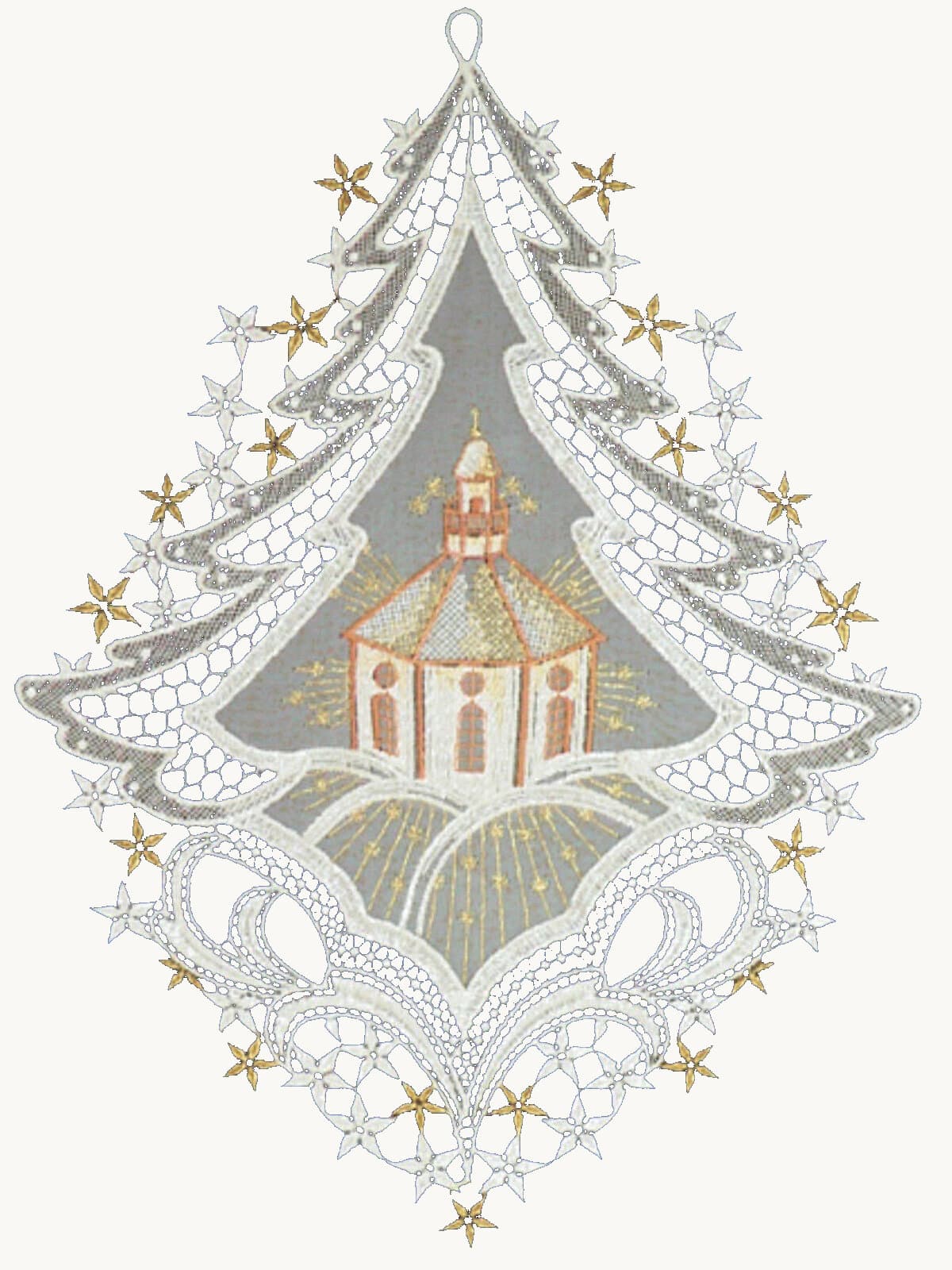
The quality that distinguished Plauener Spitze from its competitors was not merely technical. It was aesthetic. The designers of Plauen drew from the landscape around them: the forests and hills of the Vogtland, the churches and village scenes, the seasonal rhythms of Advent and Christmas. These motifs gave the lace a specificity, a rootedness in place, that generic floral patterns could not match.
Through disruption and division
The twentieth century tested the Vogtland's lace tradition as nothing before. Two world wars devastated the region's workshops, scattering skilled artisans and destroying machinery. After 1945, Plauen found itself behind the Iron Curtain. The workshops were nationalized under the East German state, and production was directed by central planning rather than market demand.
Yet the craft survived. State-run enterprises continued to produce Plauener Spitze, and the structured apprenticeship systems of the German Democratic Republic ensured that skills were transmitted, even if creative freedom was constrained. Some families kept private archives of patterns and techniques, preserving designs that predated the war.
German reunification in 1990 brought new freedoms and new pressures. The sudden exposure to global markets meant competing with mass-produced lace from Asia at a fraction of the cost. Many workshops closed. Those that endured did so by returning to what had always defined Plauener Spitze: uncompromising quality, handwork finishing, and designs rooted in the Vogtland tradition.
A protected heritage
Today, Plauener Spitze carries a protected geographical indication within Germany, a recognition that authentic Plauen lace can only be produced in the Vogtland by workshops that adhere to the traditional methods. The designation is not merely a marketing tool. It is an acknowledgment that the craft is inseparable from the place, that the thread, the patterns, the finishing techniques, and the hands that perform them are all part of a single, continuous tradition.
The handful of workshops that continue to operate in the Vogtland are custodians of something that cannot be replicated elsewhere. The machines may be maintained and the patterns preserved, but what truly defines Plauener Spitze is the accumulated knowledge of generations, passed from hand to hand in the same workshops, on the same streets, under the same grey Saxonian skies.
Continue reading
March 6, 2026·7 min read
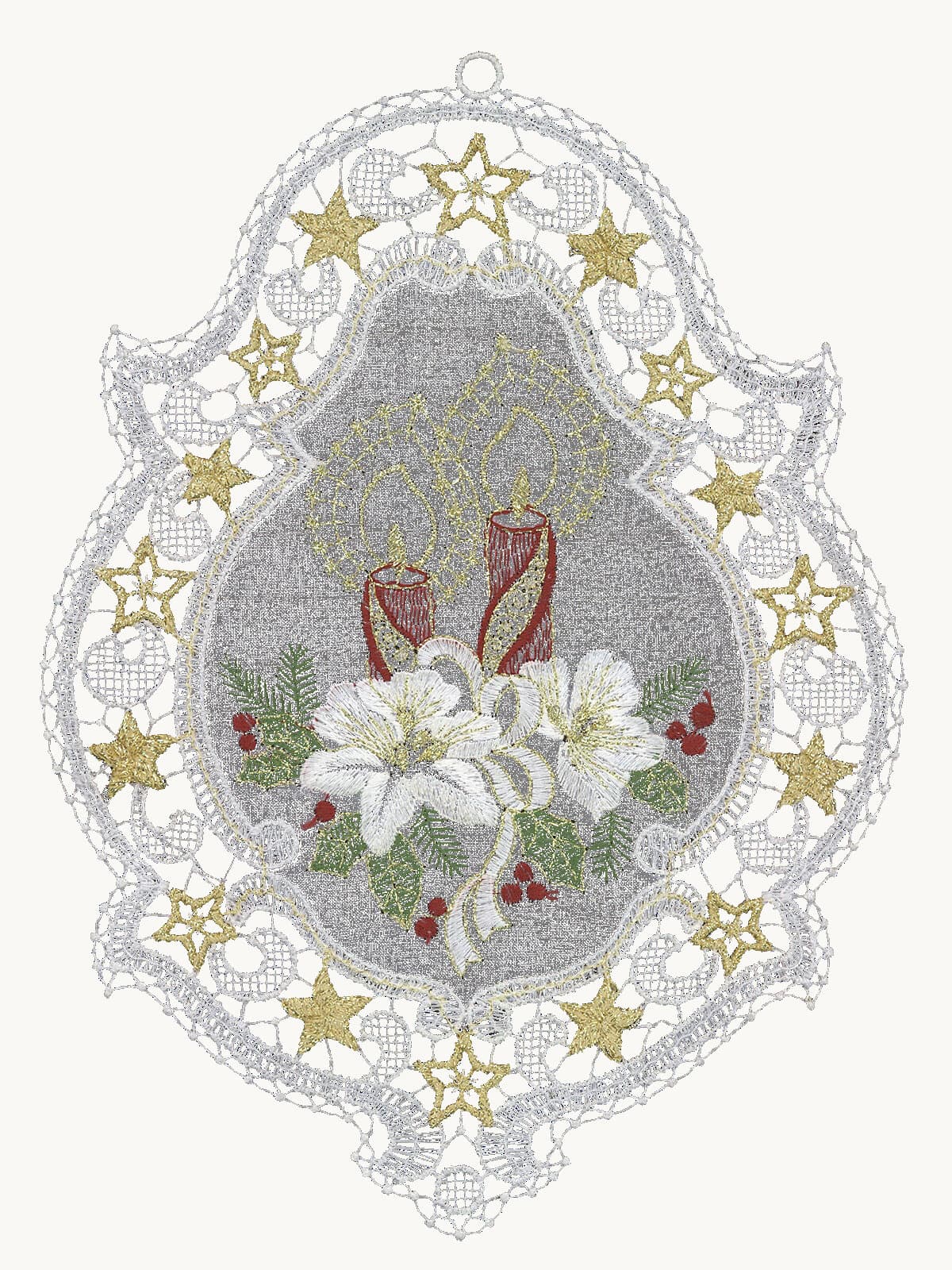
How Plauen lace is made
From the initial design drawing to the Schiffchen shuttle loom and the chemical dissolving bath, the process behind every piece of Plauener Spitze.
February 18, 2026·6 min read
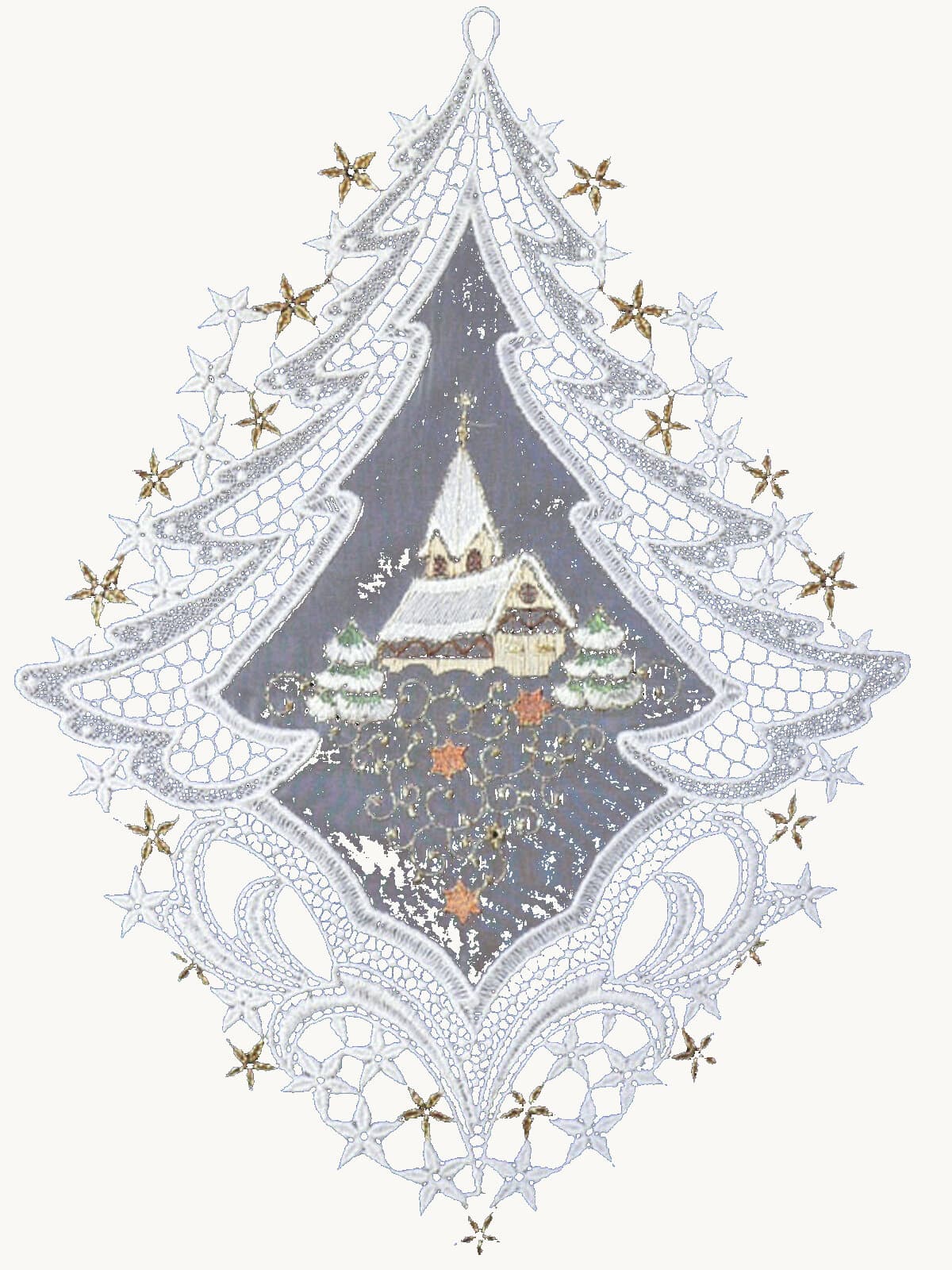
Otto Dotzauer and Stickerei Vogel
The last families preserving the craft of Plauener Spitze. How two Vogtland workshops carry a tradition that once employed tens of thousands.